


 Pristupačnost
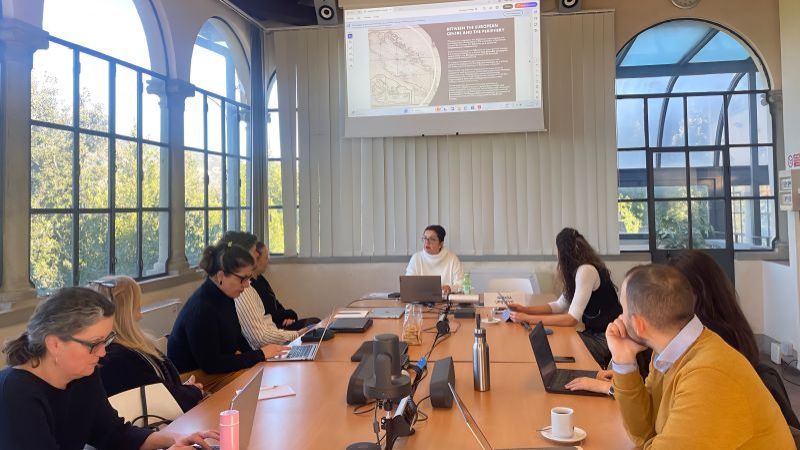
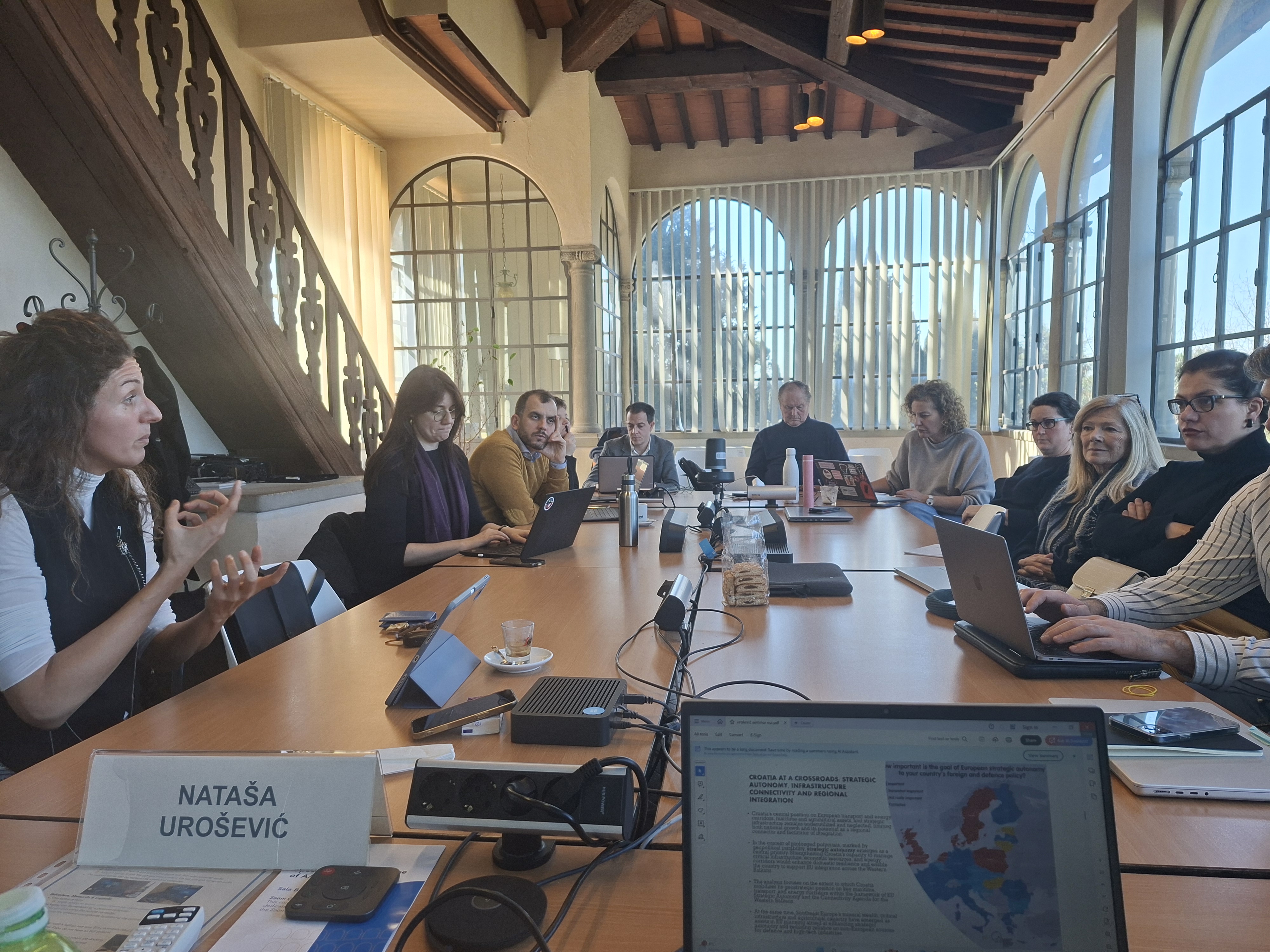
Croatia at the Crossroads – Strategic Autonomy, Infrastructural Connectivity, and Regional Integration was one of the topics of the seminar “Bordering Europe: an Adriatic perspective on connectivity, Europeanisation and the challenges of south-east Europe (SEE) accession”, delivered by Associate Professor Nataša Urošević, PhD, at the European University Institute in Florence. As part of the invited lecture, the guest speaker presented the results of research she conducted as a visiting fellow at the Robert Schuman Centre for Advanced Studies.
Through an elaboration of historical experiences and contemporary challenges of EU accession in South-East Europe, the Adriatic was presented as a unique cultural space and a center of transnational mobility, which has historically functioned as a contact zone of intensive cultural transfer. Rather than being treated as a European periphery, in the current geopolitical context it is conceptualized as a key transport corridor, a dense and globally interconnected space in which the European project is actively negotiated and produced. In a period marked by polycrisis—geopolitical instability, intensified migration, overtourism, and climate pressures—the Adriatic is emerging as a key point of regional integration and infrastructure-led sustainable development. In the context of strengthening infrastructural connectivity and rethinking a shared cultural space, the Adriatic functions as a laboratory for the future of Europe.
The seminar topic attracted the attention of the scientific community and sparked an engaging discussion. Following the lecture, possibilities for project cooperation were considered, and a visit by professors from the EUI to the University in Pula was agreed upon.
This year, the European University Institute is celebrating its 50th anniversary, and last year the Republic of Croatia also joined this prestigious institution.
See the photo gallery from the guest lecture at the EUI.


Faculty of Economics and Tourism
"Dr. Mijo Mirković", Pula
A: Preradovićeva 1/1
52100 Pula
Hrvatska
T: +385 52 377 000
F: +385 52 377 013
E: fet-ured@unipu.hr
W: fet.unipu.hr
Studenti: ured-za-studente@unipu.hr


