 Pristupačnost
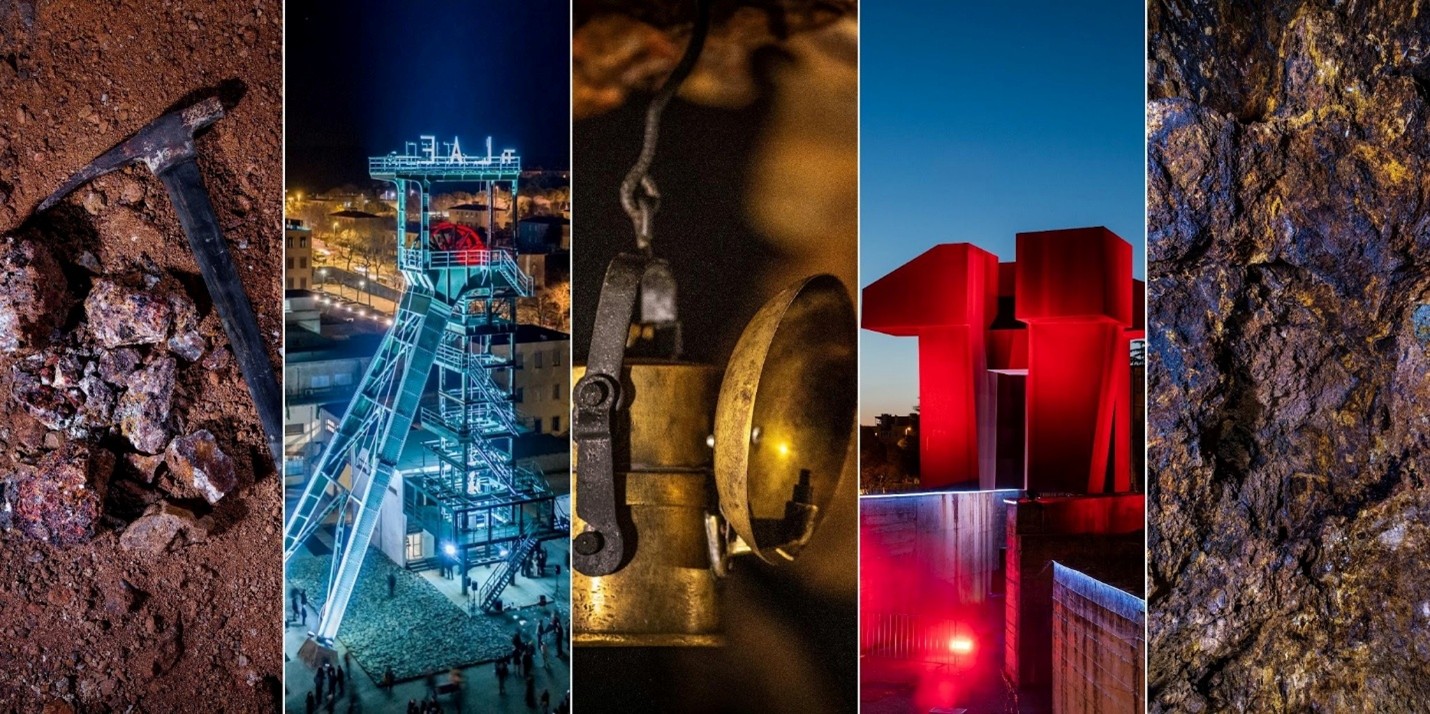


The Juraj Dobrila University of Pula, in collaboration with the partner consortium of the European project MINE STORY - "Innovative Solutions for the Interpretation, Revitalization, and Tourism Promotion of Technical and Cultural Mining Heritage in the SI-HR Cross-Border Area" is organizing an international conference "MINE STORY: Sustainable Valorization and Interpretation of Mining and Industrial Heritage," which will take place from September 23 to 25, 2027, at Juraj Dobrila University of Pula.
The project is co-funded by the European Union from the European Regional Development Fund under the Interreg Programme Slovenia - Croatia 2021-2027.
Mining and industrial landscapes are more than remnants of the economic past; they are spaces of strong transgenerational identification for communities and a source of collective memory that transcends national borders.
Increasingly, the relic landscapes of mining and associated industries are sites of regeneration and are catalysts for sustainable regional development and cultural cohesion.
This international, cross-disciplinary conference will examine the issues surrounding the sustainable valorisation of industrial sites, the fostering of international networks and the development cross-border cultural routes. It also seeks to explore how digital solutions and innovative technologies can reframe historical narratives and enhance the modern interpretation of mining heritage.
Key Themes and Topics
We welcome abstract submissions addressing the following core thematic tracks:
The topics listed above are indicative rather than exhaustive. Contributions addressing related themes and offering interdisciplinary, comparative or innovative perspectives on mining and industrial heritage are also welcome.
The conference will be followed by a study visit to mining sites in the Labin region and the Mining Heritage Festival.
About the MINE STORY Project: MINE STORY is an INTERREG Slovenia – Croatia cross-border project (2026–2028) aimed at revitalising and promoting the mining, technical, and cultural heritage of Labin region (Croatia) and Litija (Slovenia), bringing mining history to life through sustainable valorisation of transnational mining heritage, the development of cross-border cultural routes and innovative digital storytelling.
Submission Guidelines
Authors are invited to submit an abstract of a maximum of 300 words, written in English, along with a short biography (up to 100 words) and five keywords.
Please send your submissions (individual paper-panel) to conference organisers by March 10, 2027 at: mine-story@unipu.hr. All proposals will undergo a peer-review process.
Important Dates
Publication opportunities
Conference papers will be considered for publication in the peer-reviewed conference proceedings volume.
Contact information
For any inquiries regarding the conference and submissions, please contact the organizing committee at:


Faculty of Economics and Tourism
"Dr. Mijo Mirković", Pula
A: Preradovićeva 1/1
52100 Pula
Hrvatska
T: +385 52 377 000
F: +385 52 377 013
E: fet-ured@unipu.hr
W: fet.unipu.hr
Studenti: ured-za-studente@unipu.hr


